Metal CNC machining stands as one of the most precise and reliable manufacturing processes in modern industry. Using computer-controlled milling, turning, drilling, and grinding, it converts digital CAD designs into physical metal parts with micrometer accuracy. Unlike manual machining or additive processes, CNC machining offers consistency, scalability, and material versatility that few manufacturing methods can match.
From aerospace and automotive to medical and energy sectors, CNC metal machining is used to create complex geometries, threaded holes, and high-strength components that meet exacting performance requirements. However, while its benefits are numerous, this technology also presents challenges in terms of cost, energy use, and material waste.
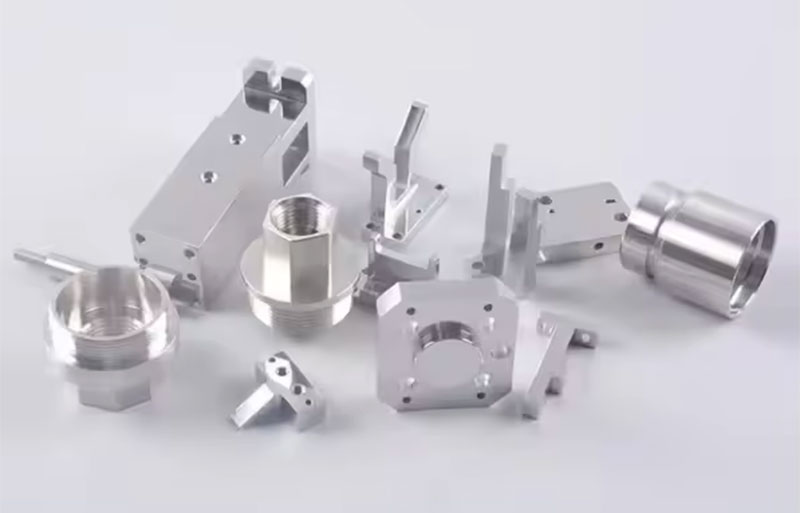
This article provides a deep, balanced view of the pros and cons of metal CNC machining, helping engineers, designers, and procurement specialists understand when — and why — it’s the right choice for metal part production.
Understanding the Process of Metal CNC Machining
At its core, metal CNC machining is a highly precise subtractive manufacturing process that removes material from a solid metal block (billet or workpiece) using computer-controlled cutting tools. Each motion of the toolpath is governed by pre-programmed code generated from CAD (Computer-Aided Design) and CAM (Computer-Aided Manufacturing) software, ensuring exact dimensional accuracy and consistency across production runs.
Unlike manual machining, CNC metal machining allows for automated multi-axis control: typically 3-axis, 4-axis, or 5-axis, enabling complex cutting, drilling, milling, and turning operations from multiple directions. The result is an efficient, repeatable process suitable for both prototyping and mass production.
Materials Commonly Used in Metal Part CNC Machining
Metal part CNC machining accommodates a wide range of materials, each offering unique mechanical and thermal properties:
Aluminum: Lightweight, corrosion-resistant, and ideal for high-speed machining.
Stainless Steel: High strength and excellent wear resistance, common in aerospace and medical applications.
Brass: Easily machinable with a fine surface finish, suitable for electrical and decorative components.
Titanium: Exceptional strength-to-weight ratio, used in high-performance parts.
Copper: Superior thermal and electrical conductivity for heat exchangers or electronics.
Each metal type requires customized tool geometries, cutting speeds, and coolant flow management to prevent tool wear and maintain surface integrity. Skilled machinists and advanced CAM programming are essential to balance cutting efficiency with tolerance control.
Typical Steps in Metal CNC Machining
The precision and control of CNC metal machining bridge the gap between design intent and manufacturable reality, ensuring every detail matches engineering specifications.
CAD Modeling – Engineers create a 3D model with all tolerances and surface finishes defined.
CAM Programming – The CAD model is converted into machine-readable toolpaths that dictate every cutting motion.
Setup and Fixturing – The metal workpiece is securely clamped and aligned to ensure repeatable accuracy.
Machining Operations – CNC milling, turning, drilling, and tapping shape the final metal component.
Inspection and Quality Control – Each dimension and surface finish is verified using precision instruments like CMM (Coordinate Measuring Machine) or laser scanning systems.
In essence, metal CNC machining transforms a digital design into a physical component with tolerances as tight as ±0.005 mm — a level of precision essential for industries such as aerospace, defense, medical, and robotics.
Advantages of Metal CNC Machining
The ability to handle complex shapes makes metal part CNC machining the preferred choice for precision engineering and product innovation. Its multi-axis capability enables intricate geometries and tight tolerances that traditional methods cannot achieve, ensuring both design freedom and consistent accuracy.
- Exceptional Dimensional Precision and Repeatability
Metal CNC machining delivers industry-leading accuracy, often achieving tolerances of ±0.01 mm or better. Automated tool positioning, servo feedback, and adaptive control systems eliminate the inconsistencies of manual processes.
This level of precision ensures reliability in mission-critical parts such as turbine blades, surgical implants, and automotive engine components — where even microscopic deviations can affect performance or safety.
Precision defines performance. CNC metal machining guarantees reproducibility from the first prototype to full-scale production.
- Material Versatility and Mechanical Integrity
Because metal part CNC machining is a subtractive process, it retains the metal’s original strength and grain structure, unlike heat-based methods like casting or laser sintering. This makes it suitable for components that must withstand high mechanical stress, impact, or thermal cycling.
From titanium aerospace brackets to hardened steel molds, CNC metal machining provides engineers the flexibility to select the optimal material without compromising on machinability or integrity.
The process preserves both strength and microstructure, ensuring reliable performance under demanding conditions.
- Automation, Scalability, and Digital Integration
Once a digital model is validated, metal CNC machining can scale from single-unit prototypes to thousands of identical parts without loss of accuracy. With the integration of robotics, automatic tool changers, and smart sensors, modern CNC machining centers can operate continuously with minimal human supervision.
This combination of automation and precision makes CNC metal machining a cornerstone of Industry 4.0 and smart manufacturing.
Automation enhances consistency and throughput — transforming CNC machining into a digitally connected, cost-efficient process.
- Superior Surface Finish and Tight Tolerances
CNC systems can achieve surface finishes of Ra 0.8 µm or better, minimizing friction, wear, and assembly resistance. High-speed spindles and fine cutting tools allow metal CNC machining to produce near-polished surfaces directly off the machine, reducing or even eliminating secondary finishing operations.
High-quality finishes improve part aesthetics, performance, and longevity — all within a single machining cycle.
- Design Flexibility and Complex Geometries
With advanced 5-axis and multi-axis machining centers, metal CNC machining allows production of intricate geometries that are impossible to achieve through manual or conventional means. Components with undercuts, curved channels, and compound angles can be machined in a single setup, enhancing both efficiency and accuracy.
Metal CNC machining unites precision, versatility, and scalability—offering engineers the freedom to create complex, high-performance components that meet the most demanding industrial standards. Its blend of accuracy, material integrity, and digital automation makes it an indispensable technology for modern manufacturing innovation.
Limitations and Challenges of Metal CNC Machining
Despite its reputation for precision and versatility, metal CNC machining is not without its challenges. Engineers must navigate trade-offs between accuracy, efficiency, and cost to determine whether CNC is the right fit for a specific application. Understanding the core limitations—ranging from material waste to heat management—helps manufacturers plan smarter and maintain optimal ROI.
- High Material Waste
Being a subtractive process, CNC metal machining removes excess material to reveal the final geometry. For hollow or lightweight designs, material utilization can be as low as 40%. Though metal chips are recyclable, additive manufacturing or casting may offer better efficiency for specific geometries.
Metal waste and energy consumption should be balanced against precision and performance needs.
- Setup and Tooling Costs
Initial setup involves programming, fixture design, and calibration — which increases cost for small runs. Specialized tools for exotic alloys (like Inconel or titanium) also experience rapid wear, driving up maintenance expenses.
Metal CNC machining becomes most cost-effective when the same setup produces multiple identical parts.
- Size and Equipment Limitations
CNC machines are confined by their work envelope. Large or oversized components often require multiple setups or modular assembly, which can introduce alignment errors.
Summary: For extremely large structures, alternative fabrication methods like welding or casting may be more economical.
- Energy and Heat Management
High spindle speeds and cutting forces generate significant heat and vibration, which can distort both tool and part dimensions. Modern CNC metal machining systems combat this with intelligent coolant delivery, thermal compensation algorithms, and stable workholding.
While these limitations don’t diminish the value of CNC metal machining, they highlight the importance of smart process selection and expert engineering. By collaborating with experienced CNC manufacturers who optimize toolpaths, material selection, and thermal control, most challenges can be effectively mitigated. In the end, the success of CNC machining lies not in eliminating its limits—but in engineering around them to achieve the highest possible precision and reliability.
Balancing the Pros and Cons: When to Choose Metal CNC Machining
Choosing whether to adopt metal CNC machining depends on balancing precision needs, production scale, and budget constraints. While this manufacturing method offers unmatched dimensional accuracy and versatility, it may not always be the most cost-effective choice for every project.
| Decision Factor | CNC Machining Advantage | When to Reconsider |
|---|---|---|
| Tolerance Requirements | Micron-level precision achievable | Overkill for low-precision applications |
| Production Volume | Efficient for small to medium runs | High-volume casting may be cheaper |
| Material Options | Works with nearly all metals | Difficult-to-machine alloys raise costs |
| Design Complexity | Ideal for intricate 5-axis parts | Simple parts may not justify CNC setup |
| Surface Finish | Excellent finish and uniformity | Not needed for rough, non-critical surfaces |
CNC metal machining is the optimal solution when your project demands uncompromising precision, repeatability, and superior surface quality—especially for aerospace, medical, and high-performance industrial components. However, for simple geometries or very large production runs, traditional processes like casting or stamping might be more economical. The key is to align the manufacturing approach with your part’s functional, aesthetic, and performance requirements.
Conclusion
Metal CNC machining remains one of the most trusted methods for manufacturing precision metal components. Its ability to balance accuracy, versatility, and scalability makes it indispensable across industries.
However, understanding both its strengths and limitations helps businesses choose wisely — leveraging CNC where it adds maximum value while exploring alternatives where cost or scale demands flexibility.
When precision, durability, and repeatability define success, CNC metal machining stands as the gold standard in industrial manufacturing.