In the manufacturing industry, to produce high-quality injection-molded products, a series of key steps need to be mastered. These steps are interconnected, and from raw material selection to final product inspection, each one impacts the quality of the finished product. Here’s a brief introduction on how to achieve high-quality injection molding processing.
I. Selecting the Right Materials: Laying a Solid Quality Foundation
The first step in making injection-molded products is to choose appropriate plastic materials based on the product’s intended use and requirements. Different materials have distinct characteristics. For example, some are strong and durable, some are heat-resistant, and some have high transparency. When selecting materials, factors such as the future operating environment of the product (e.g., whether it will be exposed to high temperatures or water), functional requirements (e.g., whether it needs to be shock-resistant or wear-resistant), and cost budget should be considered. Only by choosing the right materials can a solid foundation be laid for subsequent processing.
II. Mold Design: Determining the Product’s “Appearance”
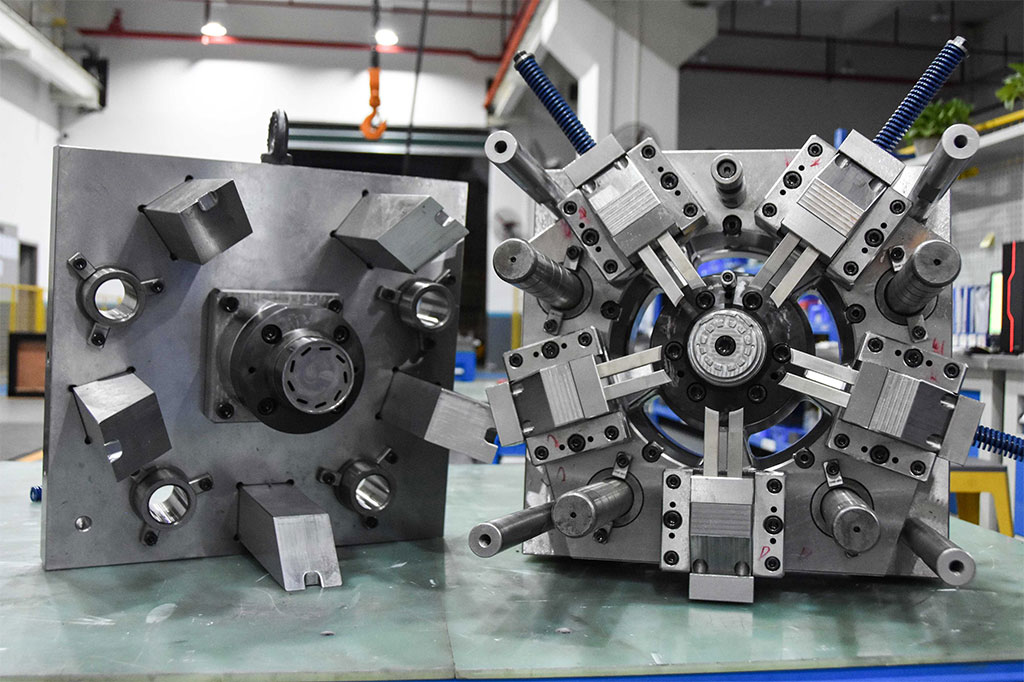
The mold serves as the “template” for injection-molded products, and its design合理性 (rationality) directly affects the product’s shape and precision. A good mold must meet two key requirements:
Accurate Dimensions
The internal shape and dimensions of the mold must strictly conform to the design drawings so that the produced products can meet the specified size and shape requirements.
Rational Runner and Cooling System
After being melted, the plastic needs to flow into the mold through “runners”. The runner design should ensure uniform plastic flow to prevent issues such as incomplete filling or air bubbles. Meanwhile, the mold’s cooling system should enable the plastic to solidify quickly, reducing deformation and improving production efficiency.
III. Equipment Guarantee: Using Reliable Machines
The performance of injection molding equipment directly impacts the stability of product quality. Modern injection molding machines should possess the following capabilities:
Precise Temperature Control
They should be able to accurately heat the plastic raw materials to ensure uniform melting, avoiding overheating that could damage the materials or insufficient heating that affects fluidity.
Stable Pressure and Speed Control
When injecting plastic, they should be able to adjust the pressure and speed according to the mold conditions to ensure that the plastic fills every corner of the mold while preventing issues like flash or deformation.
In addition, regular equipment maintenance and calibration are essential to ensure that the machines are always in optimal working condition.
IV. Optimizing Process Parameters: Finding the Best Production Rhythm
Several key “parameters” need to be adjusted during the injection molding process. These parameters are like the heat and seasonings when cooking; only by adjusting them properly can high-quality products be produced:
Temperature
This includes the barrel temperature (the temperature for melting the plastic) and the mold temperature (the temperature for cooling the plastic). Different materials require different temperature ranges.
Pressure
The injection pressure determines how fully the plastic fills the mold, while the holding pressure affects the product’s density and shrinkage rate.
Time
Excessively long cooling times waste production capacity, while overly short cooling times can lead to product deformation. A balance needs to be found.
By repeatedly testing and adjusting these parameters to find the most suitable combination for the current materials and mold, stable and high-quality products can be produced.
V. Quality Control: Strict Inspections at Every Level
To ensure product quality, strict inspections must be carried out throughout the production process:
Raw Material Inspection
When raw materials arrive at the factory, it is necessary to confirm that they meet the standards to avoid using unqualified materials.
In-Process Sampling Inspection
During production, products should be sampled and inspected regularly to check for issues such as dimensional deviations and surface defects, enabling timely discovery and adjustment.
Finished Product Inspection
After the products are completed, professional tools should be used to inspect their dimensional accuracy and surface smoothness. For products with functional requirements, their strength, durability, and other performance aspects should also be tested.
Conclusion: Attention to Detail Leads to High-Quality Products
High-quality injection-molded products are not produced casually. Instead, it requires effort in every aspect, including materials, molds, equipment, processes, and quality inspections. Only by paying attention to these details can products with high precision, high performance, and good appearance be produced, gaining an advantage in the market competition. Whether it’s small parts or large components, treating each step with care is the key to manufacturing high-quality injection-molded products.