Now, let’s take a closer look at how the grinding process actually works.
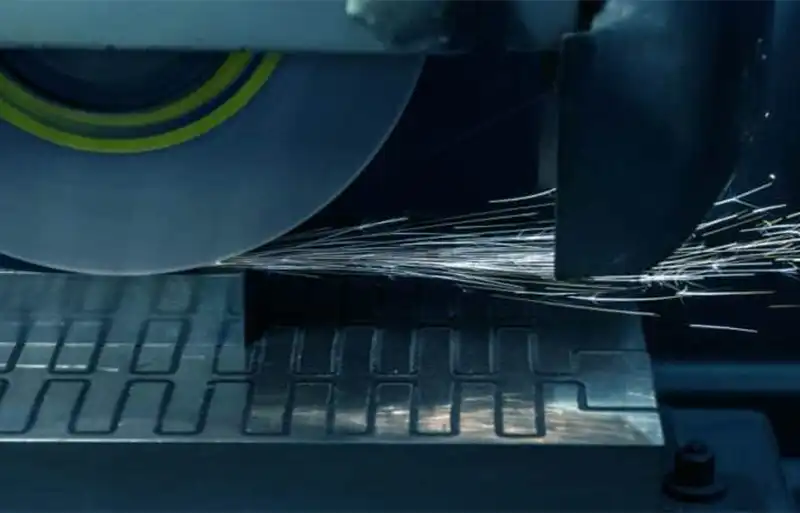
The process starts with the grinding wheel rotating at high speeds, using abrasive particles to remove material from the workpiece. As the wheel comes into contact with the material, friction and heat are generated, gradually removing small chips and shaping the surface.
The pressure applied to the workpiece and the wheel speed are crucial factors that influence grinding efficiency and surface quality. By managing these factors, manufacturers can prevent overheating or damage to the part. Additionally, using a coolant helps reduce heat, minimize friction, and clear away debris.
Finally, the movement of the workpiece or wheel is precisely controlled using the machine’s table and cross-feed systems. This ensures the process achieves tight tolerances and smooth finishes.
In summary, by combining rotation, pressure, coolant, and precision control, grinding process delivers high-quality results suitable for various manufacturing applications.