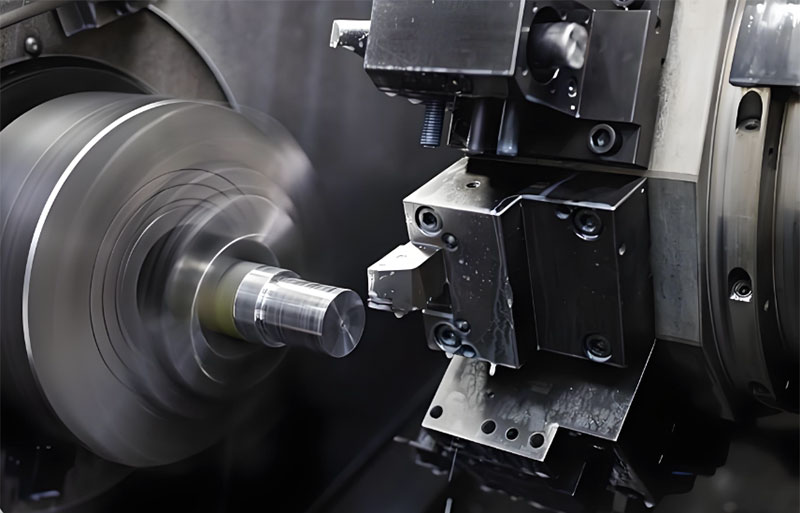
A CNC lathe operates by following programmed instructions to shape a rotating workpiece. Here is the general process:
Design Creation
Engineers and designers create a detailed 3D model of the intended part using CAD (Computer-Aided Design) software. The model defines all critical dimensions, shapes, and features.
Toolpath Generation
CAM (Computer-Aided Manufacturing) software converts the CAD model into a sequence of tool movements called G-code. Each line of G-code specifies a position, speed, and feed rate for the lathe cutting tool.
Machine Setup
Technicians install the appropriate lathe cutting tools in the turret and secure the raw workpiece in the chuck or collet on the spindle. They also calibrate the machine’s home position.
Execution of G-Code
The CNC controller reads the G-code and moves the carriage and tool turret along the X-axis and Z-axis (and other axes, if available). The spindle rotates the workpiece at programmed speeds while the tool removes material.
Monitoring and Adjustment
Many CNC lathes include sensors and software routines that monitor tool wear, vibration, and cutting forces. The controller can adjust feeds and speeds in real time to maintain accuracy and surface finish.
Part Inspection
After the machining cycle ends, the CNC machine operator measures key dimensions—such as diameters, lengths, and geometric features—against the original specifications to ensure compliance.